
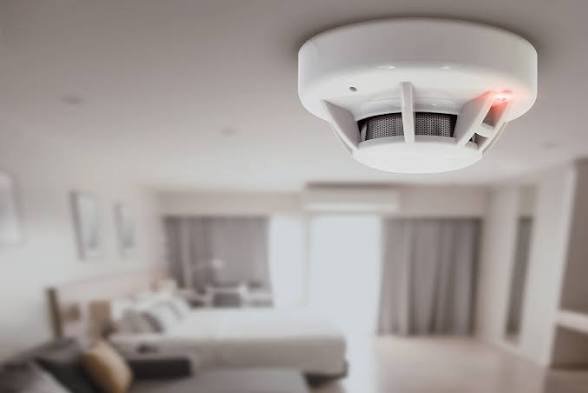
Smoke alarms are among the simplest devices used for early fire detection, yet they are also among the most frequently misunderstood. Many people know that an alarm needs a working battery, but misconceptions about battery life, replacement, testing, and warning sounds can lead to dangerous gaps in protection.
A smoke alarm that is installed correctly but has a dead, missing, or unsuitable battery may fail when it is needed most. The National Fire Protection Association (NFPA) recommends testing smoke alarms monthly and replacing batteries according to the manufacturer’s instructions; for alarms with replaceable batteries, annual replacement is a commonly recommended practice.
These principles are especially relevant when considering a Fire alarm system in Pakistan, where buildings can have different electrical conditions, occupancy levels, maintenance practices, and regulatory requirements.
This guide separates fact from fiction and explains what property owners, facility managers, and homeowners should know about smoke alarm batteries.
Why Smoke Alarm Batteries Matter
A smoke alarm is designed to provide an early warning when smoke from a developing fire is detected. That warning can give occupants valuable time to evacuate.
But the alarm can only perform its function if it has a reliable power source.
Battery-powered smoke alarms depend entirely on their batteries. Hardwired alarms generally receive power from the building’s electrical supply and may have a backup battery. Long-life alarms may contain sealed batteries that are not intended to be replaced by the user.
This means there is no single battery-maintenance rule that applies to every smoke alarm.
The first step should always be identifying what type of alarm you have and what the manufacturer specifies for it.
Myth 1: “A Smoke Alarm Battery Lasts Forever”
The reality: Batteries have a limited service life.
No ordinary battery lasts forever.
Battery life depends on factors such as:
- Battery chemistry
- Alarm design
- Alarm usage
- Environmental conditions
- Manufacturer specifications
- Age of the battery
- Frequency of alarm activation
A conventional battery-powered smoke alarm may require regular battery replacement. NFPA guidance recommends replacing batteries in alarms with replaceable batteries at least annually, while manufacturers may specify particular replacement schedules.
Some modern smoke alarms use sealed, non-replaceable batteries designed to last for up to 10 years. In such cases, the battery is not replaced separately; the entire alarm is replaced at the end of its service life.
Therefore, the correct question isn’t simply “How long does a battery last?”
Instead, ask:
What power system does this particular smoke alarm use, and what does the manufacturer require?
Myth 2: “If the Alarm Is Quiet, the Battery Must Be Fine”
The reality: Silence does not prove that the alarm is functioning correctly.
A smoke alarm that isn’t making noise is not necessarily a working smoke alarm.
An alarm can have:
- A weak battery
- A disconnected battery
- A damaged sensor
- An internal fault
- An expired service life
- A power-supply problem
This is why routine testing is important.
NFPA recommends testing smoke alarms at least monthly using the test button.
Testing provides a practical way to confirm that the alarm can produce its warning signal.
However, a successful test does not mean the alarm can be ignored for the rest of its life. Smoke alarms require continuing maintenance and eventual replacement.
Myth 3: “The Occasional Chirp Isn’t Important”
The reality: A recurring chirp may be a warning that requires attention.
One of the most recognizable smoke alarm sounds is the periodic chirp.
A single chirp at regular intervals commonly indicates a low battery, although the exact sound pattern varies between manufacturers and models.
NFPA explains that a chirp occurring approximately every 30 or 60 seconds can indicate a low battery.
Ignoring that sound is risky.
The correct response is to consult the alarm’s instructions and determine whether the battery needs replacing or whether the entire alarm needs replacement.
Don’t simply remove the battery to stop the noise.
A smoke alarm with its battery removed cannot provide the intended protection.
Myth 4: “Removing the Battery Temporarily Is Harmless”
The reality: A disabled alarm cannot warn you about a fire.
People sometimes remove a battery because an alarm is chirping, producing nuisance alarms, or interrupting sleep.
This creates a serious problem.
If the battery is removed and the alarm is not connected to another functioning power source, that alarm may no longer provide protection.
NFPA specifically advises against borrowing or removing batteries from smoke alarms because the alarm cannot warn occupants about a fire when its battery is missing or disconnected.
If nuisance alarms are occurring, investigate the reason instead.
Possible causes include:
- Cooking fumes
- Steam
- Dust
- Incorrect placement
- Environmental conditions
- Sensor contamination
- A malfunctioning or aging alarm
Relocating an alarm or selecting a more appropriate type may be a better solution than disabling it.
Myth 5: “Any Battery Will Work”
The reality: You should use the battery type specified by the manufacturer.
A common assumption is that if a battery physically fits inside the alarm, it must be suitable.
That’s not necessarily true.
Manufacturers may specify particular battery types, brands, capacities, or models.
NFPA guidance states that replacement batteries should be selected according to the manufacturer’s instructions. Using a different battery from the specified type may affect alarm performance.
Before purchasing a replacement battery, check:
- The alarm’s model number
- The manufacturer’s instructions
- The battery compartment label
- The recommended battery type
- Any polarity requirements
Never guess when the manufacturer’s information is available.
Myth 6: “Rechargeable Batteries Are Always Better”
The reality: Rechargeability does not automatically make a battery appropriate.
Rechargeable batteries can be useful in many applications, but smoke alarms are safety devices that should be operated according to their specific design.
If the manufacturer specifies a particular battery type, follow that requirement.
Do not replace a recommended battery with a rechargeable alternative simply because it is convenient or reusable.
The important factor is compatibility and reliable performance, not whether a battery can be recharged.
Myth 7: “A New Battery Means the Alarm Is as Good as New”
The reality: Batteries and smoke alarms have different service lives.
Replacing a battery does not reset the age of the smoke alarm.
A smoke alarm that has been operating for many years may still need replacement even after a new battery has been installed.
NFPA guidance recommends replacing smoke alarms when they reach approximately 10 years of age, or sooner if they fail to respond properly when tested.
This distinction is important:
Battery replacement maintains the power source. It does not extend the alarm’s overall service life indefinitely.
If you don’t know how old an alarm is, check its manufacturing or replacement information where available and consult the manufacturer.
Myth 8: “A 10-Year Battery Means the Alarm Lasts Forever”
The reality: Long-life batteries do not make the alarm permanent.
Sealed 10-year smoke alarms are designed to reduce the need for routine battery replacement.
However, the alarm itself still has a finite service life.
NFPA materials explain that alarms with non-replaceable long-life batteries are designed for service periods of up to 10 years and that the complete alarm should be replaced after that period.
This design can be particularly convenient in locations where battery replacement is difficult.
But “10-year battery” should never be interpreted as “maintenance-free forever.”
Regular testing remains important.
Myth 9: “If I Replace the Battery, the Chirping Will Always Stop”
The reality: Persistent chirping can have other causes.
A low battery is a common reason for periodic chirping, but it isn’t the only possibility.
If an alarm continues to chirp after the battery has been correctly replaced, consider:
- Whether the replacement battery is correct
- Whether the battery is installed correctly
- Whether the alarm is receiving another type of power
- Whether the alarm is indicating an internal fault
- Whether it has reached the end of its service life
- Whether the manufacturer specifies a different reset procedure
NFPA guidance notes that continued chirping after battery replacement can indicate that the alarm has reached the end of its life and needs replacement.
Don’t repeatedly replace batteries without investigating the underlying issue.
Myth 10: “Hardwired Alarms Don’t Need Batteries”
The reality: Many hardwired alarms have backup batteries.
Hardwired systems receive their primary power from the building’s electrical supply, but many individual hardwired smoke alarms also use backup batteries.
The backup battery becomes important if normal electrical power is interrupted.
NFPA guidance indicates that hardwired smoke alarms generally have backup batteries and that these batteries should be replaced according to manufacturer instructions or when the low-battery warning occurs.
Therefore, a hardwired installation should not automatically be treated as maintenance-free.
Facility managers should understand both the primary power supply and backup-power arrangements.
Myth 11: “Testing Once a Year Is Enough”
The reality: Smoke alarms should be tested more frequently.
Annual battery replacement and alarm testing are two different things.
Replacing a battery once a year does not eliminate the need to test the alarm.
NFPA recommends testing smoke alarms monthly using the test button.
A simple maintenance schedule can include:
Every month
Press the test button and confirm that the alarm responds.
Regularly
Check for visible damage, contamination, or other obvious problems.
At the manufacturer’s specified interval
Replace batteries where applicable.
Around 10 years
Replace smoke alarms that have reached the end of their recommended service life.
Always prioritize the manufacturer’s instructions where they provide more specific requirements.
Myth 12: “A Smoke Alarm Is the Same as a Complete Fire Alarm System”
The reality: Individual smoke alarms and building fire alarm systems serve different purposes.
This distinction is particularly important in Pakistan.
A standalone smoke alarm is generally a localized device intended to detect smoke and provide an audible warning.
A larger building fire alarm system can incorporate multiple components, such as:
- Smoke detectors
- Heat detectors
- Manual call points
- Alarm sounders
- Visual notification devices
- Control panels
- Backup power
- Monitoring interfaces
- Other fire-safety equipment
The appropriate system depends on the building, occupancy, layout, risk level, and applicable requirements.
Pakistan Engineering Council lists the Building Code of Pakistan – Fire Safety Provisions – 2016 among the country’s building codes and standards.
The code also contains provisions addressing smoke alarms and fire alarm systems in specified occupancies.
Therefore, choosing a Fire alarm system in Pakistan should involve more than buying individual smoke alarms from a retailer. The building should be assessed to determine the appropriate detection and alarm arrangement.
Myth 13: “A Fire Alarm System Only Needs to Work During a Fire”
The reality: Reliability is built through regular maintenance.
Fire protection equipment spends most of its life waiting for an emergency.
That means maintenance is critical.
A detection system may remain silent for months or years, but it must still be ready to operate immediately when smoke or another fire condition is detected.
For larger installations, maintenance may involve:
- Routine system testing
- Detector inspection
- Battery checks
- Control-panel checks
- Alarm-device testing
- Fault monitoring
- Backup-power testing
- Professional servicing
Pakistan Engineering Council’s professional classification includes installation, commissioning, and maintenance of fire detection, alarm, and suppression systems as a recognized engineering specialization.
For commercial properties, using appropriately qualified professionals is therefore an important part of responsible fire-safety management.
Myth 14: “More Batteries Mean Better Fire Protection”
The reality: Good fire protection depends on system design, not simply battery quantity.
Installing extra batteries does not automatically make a building safer.
Effective protection depends on factors such as:
- Correct detector selection
- Proper placement
- Reliable power
- Correct alarm coverage
- Appropriate system design
- Regular testing
- Maintenance
- Clear evacuation procedures
- Staff awareness
A poorly positioned detector with a fresh battery is still a poorly positioned detector.
The goal should be reliable detection and notification, not simply having more devices.
Myth 15: “Battery Maintenance Is Only a Homeowner’s Concern”
The reality: Commercial properties also need dependable power and maintenance.
Offices, shops, schools, hotels, restaurants, warehouses, apartment buildings, and other commercial premises may use different fire detection arrangements.
Large installations may have centralized control panels and backup power rather than individual consumer-style smoke alarms.
In these environments, battery maintenance becomes part of the broader fire-alarm maintenance programme.
Property managers should maintain records showing:
- Equipment locations
- Battery types
- Installation dates
- Testing dates
- Inspection results
- Faults
- Repairs
- Replacement dates
- Service-provider information
This documentation makes it easier to identify neglected equipment and plan maintenance.
How to Choose the Right Smoke Alarm Battery
When a replacement is required, follow a simple process.
Step 1: Identify the alarm
Find the manufacturer and model number.
Step 2: Check the instructions
Look for the specified battery type and replacement instructions.
Step 3: Inspect the existing battery
Check its size, type, and installation orientation.
Step 4: Install the approved replacement
Follow the manufacturer’s instructions carefully.
Step 5: Test the alarm
Use the test button after replacement.
Step 6: Record the maintenance
For commercial properties, document the replacement date and any relevant observations.
If the alarm still indicates a fault, don’t assume another battery will solve it. Investigate the alarm itself.
Battery Maintenance in Pakistan’s Climate
Pakistan experiences a wide range of environmental conditions, from hot and humid coastal areas to extremely hot inland regions and colder northern areas.
Environmental conditions can affect electronic equipment and batteries.
For this reason, fire-alarm equipment should be installed in suitable locations and maintained according to manufacturer recommendations.
Avoid exposing alarms or their power components to unnecessary:
- Moisture
- Excessive heat
- Dust
- Chemical vapours
- Physical damage
Commercial facilities should also consider whether their equipment is appropriate for the environment in which it is installed.
A professional fire-safety assessment can help identify environmental issues that may affect detection reliability.
A Simple Smoke Alarm Maintenance Checklist
Use this checklist as a practical starting point:
Monthly
- Test the alarm.
- Confirm the warning sound is audible.
- Check for visible damage.
- Make sure the alarm has not been covered or obstructed.
When a low-battery warning occurs
- Follow the manufacturer’s instructions.
- Replace the battery if it is replaceable.
- Replace the entire alarm if it uses a sealed battery and has reached the relevant end-of-life condition.
Annually
- Review battery replacement requirements.
- Check the alarm’s condition.
- Review maintenance records.
- Confirm that occupants know what the alarm sounds mean.
At the end of the alarm’s service life
- Replace the complete smoke alarm according to manufacturer guidance.
For larger fire alarm systems
- Follow the system manufacturer’s inspection and maintenance programme.
- Use appropriately qualified personnel where professional servicing is required.
The Bottom Line
Smoke alarm batteries may be small, inexpensive components, but their role in fire detection is significant.
The biggest mistake is assuming that an alarm is reliable simply because it is mounted on the ceiling and appears normal.
Remember these key points:
- Batteries have limited service lives.
- A quiet alarm isn’t necessarily a functioning alarm.
- Regular chirping should not be ignored.
- Never deliberately disable a smoke alarm.
- Use the battery specified by the manufacturer.
- Sealed 10-year batteries don’t make an alarm permanent.
- Hardwired alarms may still have backup batteries.
- Test smoke alarms regularly.
- Replace aging alarms.
- Larger buildings may require a complete fire detection and alarm system rather than standalone smoke alarms.
When evaluating fire protection for a property in Pakistan, consider the complete system rather than focusing only on batteries. A properly designed and maintained Fire alarm system in Pakistan can incorporate detection, notification, backup power, monitoring, and other components appropriate to the building’s risks.
For fire-safety equipment and professional solutions, property owners can learn more from Flame Defender.
Most importantly, remember that fire safety is not a one-time purchase. Installation, testing, maintenance, staff awareness, and timely replacement all contribute to reliable protection.
Frequently Asked Questions
1. How often should smoke alarm batteries be replaced?
For smoke alarms with replaceable batteries, annual replacement is a commonly recommended practice, but the manufacturer’s instructions should always be followed. Replace the battery sooner if the alarm gives a low-battery warning.
2. What does a chirping smoke alarm mean?
A periodic chirp commonly indicates a low battery, although the exact sound pattern varies by manufacturer. If the alarm continues chirping after the battery has been correctly replaced, it may have another fault or may have reached the end of its service life.
3. Can I use any battery in my smoke alarm?
No. Use the battery type specified by the smoke-alarm manufacturer. A battery that physically fits may not provide the required performance or compatibility.
4. Do hardwired smoke alarms need batteries?
Many hardwired smoke alarms have backup batteries. These batteries should still be checked and replaced according to the manufacturer’s instructions.
5. How long does a smoke alarm last?
Many smoke alarms are recommended for replacement after about 10 years, although the exact service life depends on the manufacturer and model. A new battery does not reset the age of the alarm. NFPA guidance recommends replacing alarms at 10 years or sooner if they do not respond properly to testing.